Exploring Creativity
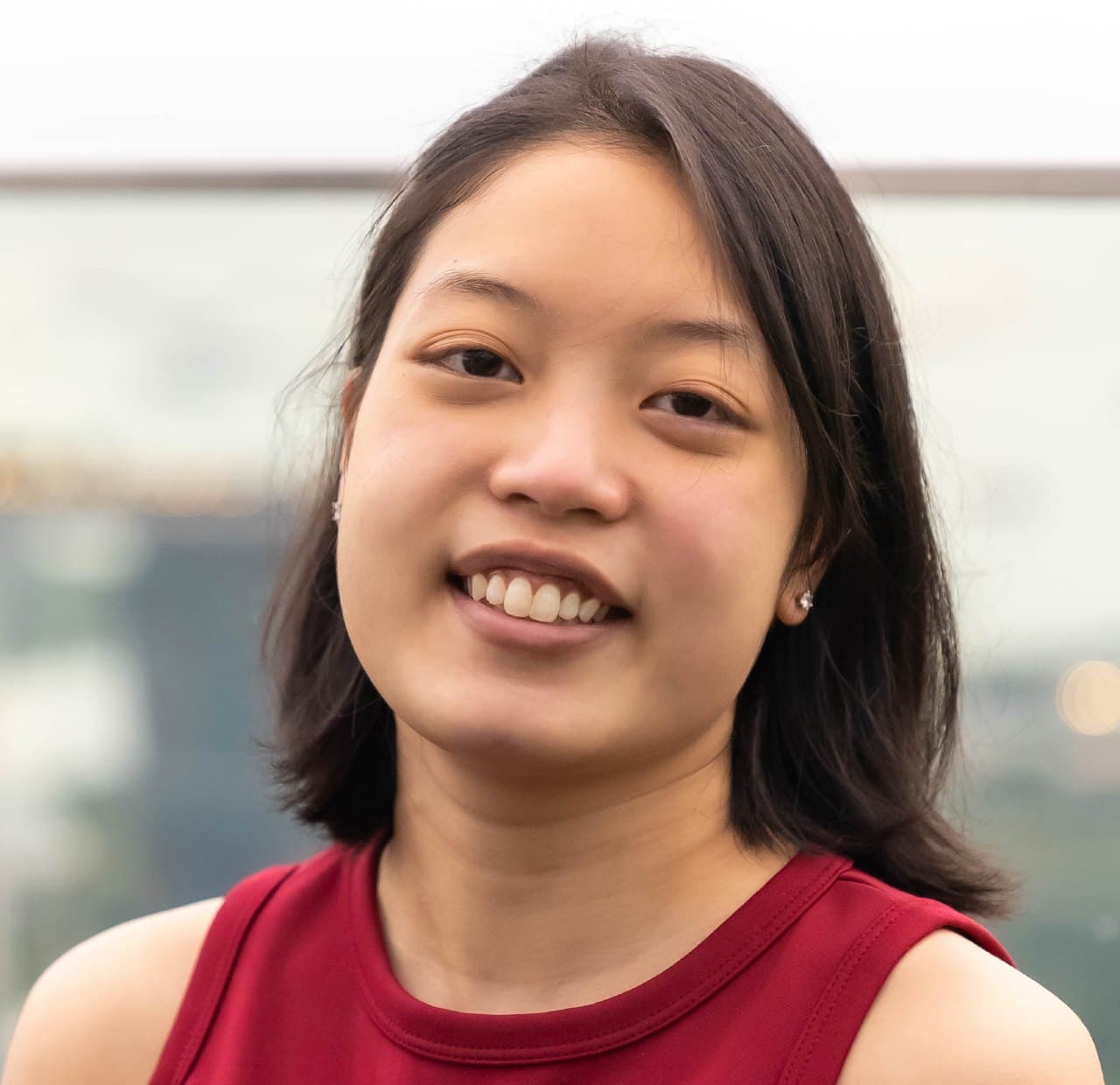
I am Deputy Head (Information Management) at the Information Programme Center, DSTA, Singapore. I run The LAN Shop — where we study Language, Agents, and Networks in the context of online social spaces, online influence and persuasion. I obtained my PhD in Societal Computing at the Department of Computer Science in Carnegie Mellon University, supervised by Prof Kathleen Carley. My research interests are the study of the interaction between AI agents (bots) and humans in online communities and automated persuasion. My research methodologies involve network science, computational social sciences and natural language processing. You can download my latest resume here. I received my Bachelors in Computer Science from the Department of Computer Science of National University of Singapore, where I won the NUSS medal for Outstanding Achivement.
PhD Thesis
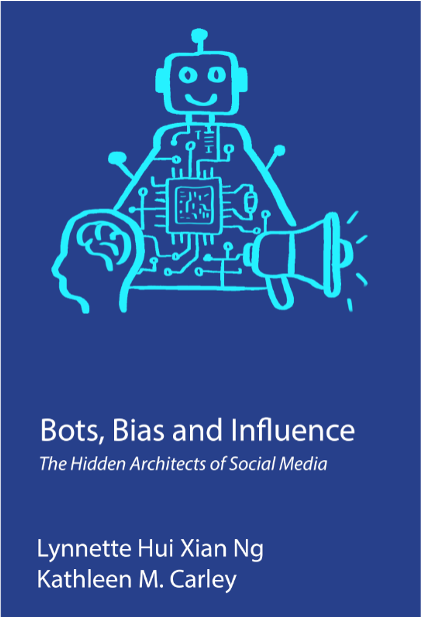
A portion of the thesis has been published into a trade book Bot, Bias and Influence: The Hidden Architects of Social Media by Cambridge Publishing Press.
Amazon Link / Publisher Link If you need a discount code, or would like to do a book review, please email me!
                @book{ng2026bots,
                  title={Bots, Bias, and Influence: The Hidden Architects of Social Media},
                  author={Ng, L.H.X. and Carley, K.M.},
                  isbn={9781036473112},
                  url={https://books.google.com/books?id=dnTtEQAAQBAJ},
                  year={2026},
                  publisher={Cambridge Scholars Publishing}
                }
My Heart Transplant Story
I was born with Hypertrophic cardiomyopathy is a condition in which the heart becomes thickened But it means that I was easily breathless, and had lots of trouble doing even the most minute stuff like climbing a flight of stairs.
Then my electrical rhythm started to fail. I had two pacemakers implanted since I was a teenager.
I battled this for 29 years, the pain, the medications.
One day in Feb 2023, I wasn't responding to the normal medications.
On March 16 2023, my heart went into an abnormal rhythm for 39 days.
After much failed medication attempts, I was admitted to UPMC Presbyterian hospital.
There, I was blessed to receive a heart transplant.
It is a whirlwind story, and I am still writing it.
Read & Subscribe to the stories!
What I do outside research
I play the violin. I play the violin for the Pittsburgh Philharmonic Orchestra
I also love to explore the city of Pittsburgh and the wider United States. Even more so after discovering bits and pieces that are so amazing of a normal human.
Check out some of my explorations on my Instagram! It also contains snippets of my PhD life! This instagram account and its adventures have been featured on School of Computing.
Research Interests
- Societal Computing
- Network Analysis
Talks, Awards, News Features
- Jan 2026: Gave a Talk at University of Pittsburgh CS Colloquium ``Simulating Social Media Bot Personas with LLM-Augmented Agent-Based Models at University of Pittsburgh"
- Dec 2025: Work featured on Channel News Asia "Commentary: X’s account transparency features confirm what many already suspected" article here
- Nov 2025: Interviewed in a video "Is the Internet Really Dead" by NewsPress. video here
- Oct 2024: Best Poster Award for Grefenstette Center Tech Ethics Symposium
- Sept 2024: SBP-BRiMS tutorial: The BotBuster Universe
- April 2024: IDeaS Newsletter Research Spotlight
- March 2024: CMU GUSH Grant
- Aug 2023: CMU School of Computer Science feature: Standardized Data Set Annotations Could Aid in Detecting Social Media Sentiments for paper Is my stance the same as your stance? A cross validation study of stance detection datasets
- Aug 2023: New Scientist feature
Armies of bots battled on Twitter over Chinese spy balloon incident for paper Deflating the Chinese balloon: types of Twitter bots in US-China balloon incident
It was also featured on Reddit's r/Science! Read it here!! - Mar 2023: Interviewed on Scientific American about misinformation and disinformation patterns Read it here
- Jan 2022: Input Magazine feature: Have researchers cracked the code to TikTok virality?for paper Will you dance to the challenge?: predicting user participation of TikTok challenges
Teaching and Service
- 2021-2025: CASOS Summer Institute talks and organization
- June 2025: PC Member, AAAI
- 2024-2025: PC Member, CySoC workshop, ICWSM
- Reviewer for PLOS One, Scientific Reports, AI & Society, Social Network Analysis and Mining, Information Processing and Management, Journal of Computational Social Science
- 2024-2025: Teaching Assistant Dynamic Network Analysis (17-801), Computational Modeling of Complex Socio-Technical Systems (17-821)
Contact
Twitter
Linkedln
Instagram
Google Scholar